

Outsmart Alcohol: Rewire Your Brain
Stop Fighting Alcohol
- Start Outsmarting It
The Sinclair Method plus coaching flips the neurological switch that cravings rely on
Beating Alcohol dependency isn’t about willpower or "trying harder"...
...it's about neuroscience.
Our proven method rewires your brain’s response to alcohol at the core.
As seen in:








What is Rethink Drink?
Rethink Drink is the first neuroscience-led programme that turns alcohol’s own chemistry against it.
We pair the clinically proven Sinclair Method (targeted medication) with world-class coaching so you can dial cravings down to zero - not white-knuckle them away.
Scientists have published the evidence for more than 30 years, yet the silence around it is deafening. We’re breaking that silence and handing you a solution that stacks the odds in your favour. We’re here to change that - and the odds:
78 % of people who use this approach gain lasting control,
compared with <10 % on abstinence-only plans.
How we flip the script:
Targeted medication - one pill before you drink blocks the endorphin “reward” loop that keeps cravings alive.
Coach-led habit rewiring - laser-focused tools turn old triggers into new choices, day by day.
Progress tracking & on-demand support - log each drink, watch your units fall, and get real-time answers from coaches who’ve lived it.
Outcome: cravings crash, control returns, and you decide if (or when), you pour the next glass.
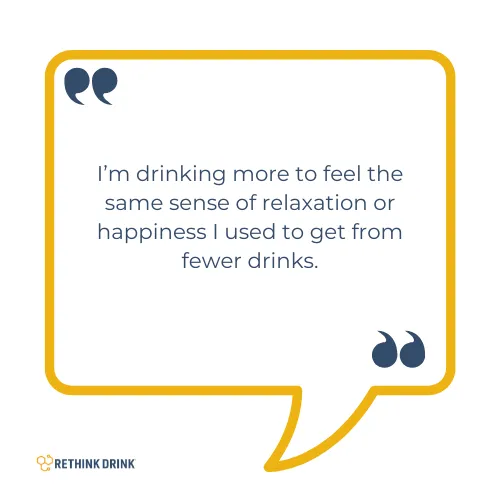
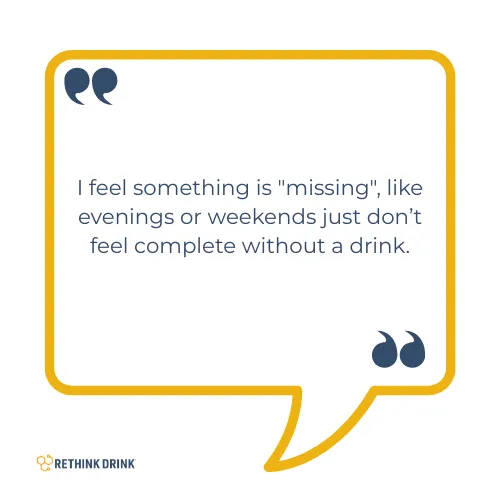
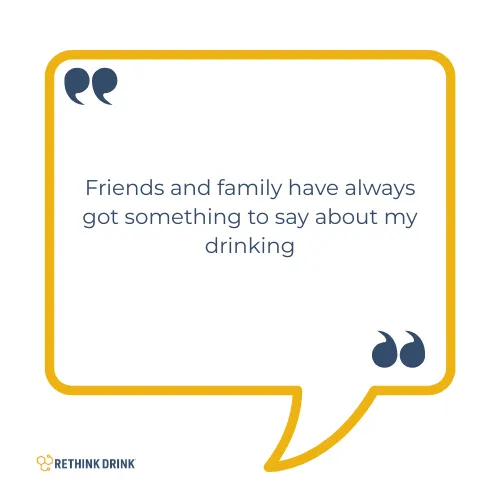
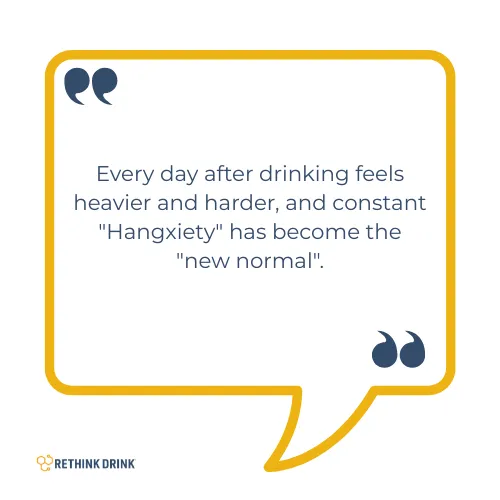
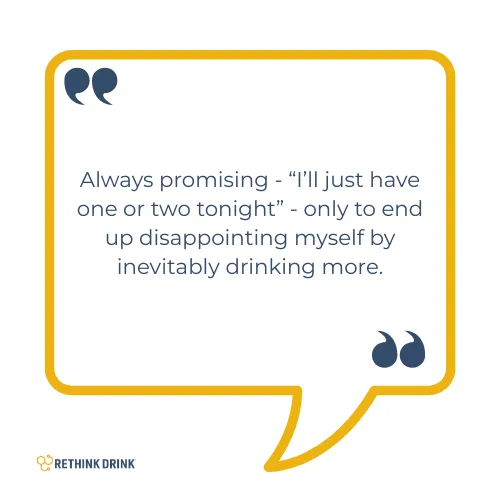
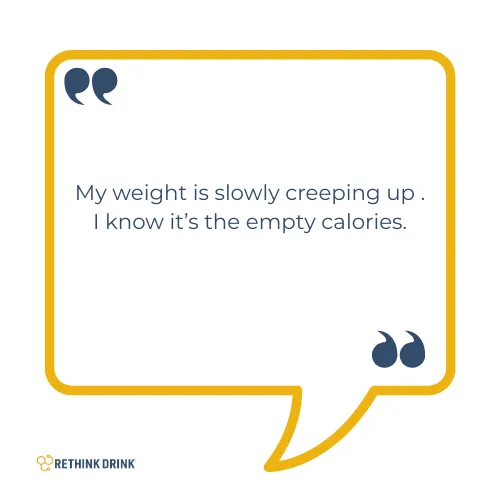
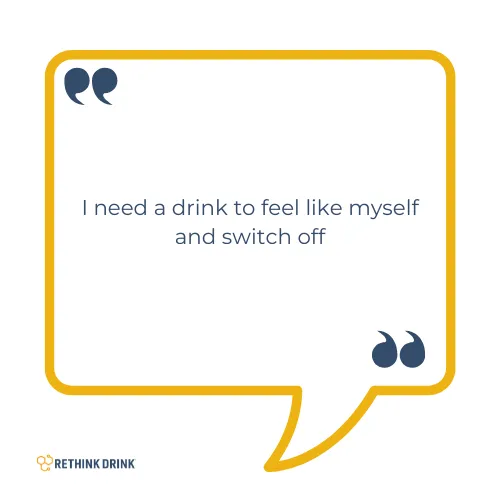
How many of these sound familiar..?
The Real Problem (and the Good News)
You wake up swearing "never again" ... yet by 5 p.m. the cork’s out.
That loop isn’t weakness; it’s your brain’s reward circuitry on repeat.
Alcohol dumps endorphins, your brain shouts “more please,” and will-power alone can’t drown that signal.
That’s why 60 % of people in traditional will-power programmes relapse within a year.
So if you’ve “failed” the quit-harder route, you’re not broken - the method was.
Block the reward loop and the cravings collapse.
Here’s the kicker: Rethink Drink costs about £4.80 a day - less than the price of the drink you’re trying to resist.
Trade that spend for control, and keep the rest of your life exactly as you like it.
"Is this like Alcoholics Anonymous (AA), or other traditional recovery approaches?"
...No - and here’s why that matters.
Alcoholics Anonymous, 12-step programmes, and similar abstinence-based methods have helped millions of people worldwide. For some, the structure and community provided by these methods are exactly what they need - and we respect that deeply.
But recovery is not one-size-fits-all.
Many people have tried traditional programmes repeatedly, only to feel frustrated when the cycle of drinking inevitably returns. Here’s the key reason why:
Alcohol dependency isn’t simply a matter of willpower, moral strength, or character.
It’s a neurological issue. Alcohol has literally rewired your brain, changing the way your reward system functions. Fighting this powerful neurological craving with willpower alone is often like trying to outrun gravity.
That’s why Rethink Drink takes a radically different approach.
We combine clinically-proven medication (TSM), science-backed habit-change techniques, and expert coaching tailored to your needs. It’s not about forcing lifelong abstinence; it’s about regaining control, naturally and sustainably.
| Abstinence/Traditional Methods (AA, 12-Step, etc.) |
Rethink Drink (Sinclair Method + Coaching) |
|
|---|---|---|
| Goal on Day 1 | Total abstinence | Reduce cravings first; abstinence optional |
| Core Mechanism | Peer support & spirituality | Targeted medication blocks endorphin “reward” loop + habit-rewiring coaching |
| Success after 12 months | < 10 % maintain full abstinence | ≈ 78 % gain lasting control over drinking |
| Format & Privacy | Group meetings, public disclosure | Private 1-to-1 coaching, app-based tracking, no labels |
| Slip-ups | “Relapse” resets progress | Seen as data—dose or strategy adjusted, no shame cycle |
| View of AUD | Moral / lifelong disease model | Reversible neuro-chemical loop |
| Typical Cost | Donation-based meetings | ≈ £4.80 / day (medication + coaching) |
|
Abstinence-only programmes help a minority. Harvard’s eight-year follow-up found 95 % of severe drinkers slipped back despite AA referral.1 Independent reviews peg AA’s overall success at just 5–10 %.2 Most newcomers never make it past the first 90 days—81 % drop out by week four and retention collapses to ~5 % after a year.3 In Professor Chick’s UK trial, naltrexone reduced heavy-drinking relapse (53 % → 34 %).4 In Sinclair’s protocol-driven follow-up, 78 % of people reached safe or alcohol-free drinking levels.5
|
||
We’re not here to knock what already works for some -
we’re here to hand everyone else a science-built way to take control.
Rethink Drink blends targeted medication, coach-led habit rewiring, and on-demand support, so the chemistry changes first and the behaviour follows.
Because lasting change isn’t about trying harder.
It’s about drinking smarter.
Ready to flip the script?
Welcome to Rethink Drink - where you call the shots.
When Alcohol Stops Being a Choice
When Alcohol Stops Being a Choice
There's a moment when drinking stops feeling optional.
You don't drink to celebrate. You drink to cope. To clean the house. To switch off. To get through the evening.
You tell yourself you'll cut back tomorrow. Then you find yourself drinking again, often more than you planned.
Not because you want to. Because something feels like it's driving the behaviour.
If that feels familiar, you're not broken. You're responding to something happening in the brain.
What Control Feels Like
What Control Feels Like
Control is not white knuckling through cravings. It's not forcing yourself to stop. And it's not misery disguised as discipline.
Real control feels quieter than that.
You stop chasing the next drink. You can leave alcohol in the fridge. You feel done, instead of desperate for more.
You still enjoy a drink. But it no longer hijacks the night. Or the next morning. Or the people around you.
That shift is what people notice first.
The Cost You're Already Paying
The Cost You're Already Paying
Over drinking rarely just costs alcohol.
It costs energy. Patience. Presence.
It shows up in the mornings. In how you speak to your partner. In how you show up for your kids. In how much of yourself work gets.
You might still be functioning. But functioning is not the same as living well.
The real question isn't "Is alcohol a problem?" It's "What is this quietly taking from me?"
This Isn't About Giving Everything Up
This Isn't About Giving Everything Up
Rethink Drink is not about quitting at all costs.
It's about restoring choice.
Some people eventually stop drinking. Others don't. Both outcomes are valid.
What matters is this: Alcohol stops being in charge.
You are no longer forced into extremes. Cold turkey or nothing. All or shame.
Just a calm, supported path back to control.
When Alcohol Stops Being a Choice
When Alcohol Stops Being a Choice
There's a moment when drinking stops feeling optional.
You don't drink to celebrate. You drink to cope. To clean the house. To switch off. To get through the evening.
You tell yourself you'll cut back tomorrow. Then you find yourself drinking again, often more than you planned.
Not because you want to. Because something feels like it's driving the behaviour.
If that feels familiar, you're not broken. You're responding to something happening in the brain.
What Control Feels Like
What Control Feels Like
Control is not white knuckling through cravings. It's not forcing yourself to stop. And it's not misery disguised as discipline.
Real control feels quieter than that.
You stop chasing the next drink. You can leave alcohol in the fridge. You feel done, instead of desperate for more.
You still enjoy a drink. But it no longer hijacks the night. Or the next morning. Or the people around you.
That shift is what people notice first.
The Cost You're Already Paying
The Cost You're Already Paying
Over drinking rarely just costs alcohol.
It costs energy. Patience. Presence.
It shows up in the mornings. In how you speak to your partner. In how you show up for your kids. In how much of yourself work gets.
You might still be functioning. But functioning is not the same as living well.
The real question isn't "Is alcohol a problem?" It's "What is this quietly taking from me?"
This Isn't About Giving Everything Up
This Isn't About Giving Everything Up
Rethink Drink is not about quitting at all costs.
It's about restoring choice.
Some people eventually stop drinking. Others don't. Both outcomes are valid.
What matters is this: Alcohol stops being in charge.
You are no longer forced into extremes. Cold turkey or nothing. All or shame.
Just a calm, supported path back to control.
Clinical Expertise Behind Rethink Drink
To ensure the highest standards of safety and care, we collaborate with leading experts in alcohol dependence research, specialising in The Sinclair Method.
“When naltrexone is taken in combination with psychosocial support, many of my patients find they are better able to stop after one or two drinks, to build more alcohol-free days, and to gradually extinguish long-held cravings.
Programmes such as Rethink Drink provide the coaching, guidance, accountability, and structured support that make this possible.”

Professor Jonathan D Chick
Principal Researcher on multiple clinical trials related to The Sinclair Method and alcohol dependence.
Consultant Psychiatrist and leading researcher in alcohol dependence
Professor Chick has spent more than 30 years at the forefront of alcohol research and clinical practice.
He has held senior academic and clinical roles, published extensively in peer reviewed journals, and served as Chief Editor of Alcohol and Alcoholism, the official journal of the Medical Council on Alcohol.
He has been recognised internationally for his contribution to the field and continues to advise on clinical practice, research and policy.
Below, he provides a clinical overview of how medication supported approaches may help people reduce their drinking and why structured support remains important.
How medication can help people reduce their drinking
Medication used under medical supervision can reduce the strength of the reward response that alcohol produces.
For some individuals, this means they may find it easier to stop after one or two drinks instead of continuing.
Many people also report that, over time, they experience more alcohol free days and feel more in control of their decisions around drinking.
Research suggests that when this type of medication is taken ahead of drinking as directed by a doctor, the learned associations
that drive urges can begin to weaken.
One of the brain pathways involved in reward and reinforcement is also associated with opioid based substances.
This medication blocks that pathway, but studies show it does not interfere with general pleasure or enjoyment.
The importance of support alongside medication
Medication alone is not considered sufficient for preventing a return to heavier drinking.
People often benefit from guidance to help them understand and manage emotional, situational or social triggers.
In all major research trials where this type of medication was shown to be effective, it was used in combination with structured counselling or support.
Programmes such as Rethink Drink provide coaching, guidance, accountability and a supportive framework that complements the medical aspect.
Who might not be suitable for this medication?
Suitability must always be assessed by a prescribing doctor.
There are situations where this medication may not be recommended, such as pregnancy, certain medical conditions, or current use of opioid based medication.
Doctors will carry out an assessment and may take routine blood tests before prescribing, as part of safe medical monitoring.
Possible side effects
Clinical trials have identified some commonly reported side effects such as nausea, headache, dizziness, fatigue and sleep changes.
These effects are usually mild and short lived, although a small number of people may experience more persistent symptoms.
A prescribing doctor will discuss possible side effects, answer any questions, and advise on the safest course of action based on individual medical history.
Is this medication addictive?
No.
This type of medication is not considered addictive, does not produce withdrawal symptoms when stopped, and does not lead people to increase the dose.
Important note
This information is provided for educational purposes only and is not a substitute for medical advice.
All medication decisions must be made in consultation with a qualified prescribing doctor.
Sceptical?
You should question claims. You should want proof.
That’s exactly why our approach is built on evidence, not willpower.
The science behind The Sinclair Method is strong.
Not because it promises outcomes, but because it consistently shows patterns of change when alcohol use is treated as a neurological condition rather than a personal failing.
"78 percent reduced their drinking"
In published clinical trials, around 78 percent of participants reduced their drinking to safer levels or experienced meaningful improvements in control using The Sinclair Method.
No hype. No miracle promises.
Just peer-reviewed research showing clear patterns of change when medication is used under proper medical supervision and supported with structured guidance.
This is why we combine modern medical treatment with coaching and support. Not to force change, but to help you turn evidence into real-world progress.
These findings come from research studies rather than individual results. Medication suitability and decisions must always be made with a prescribing doctor.
Discreet, Easy and Flexible:
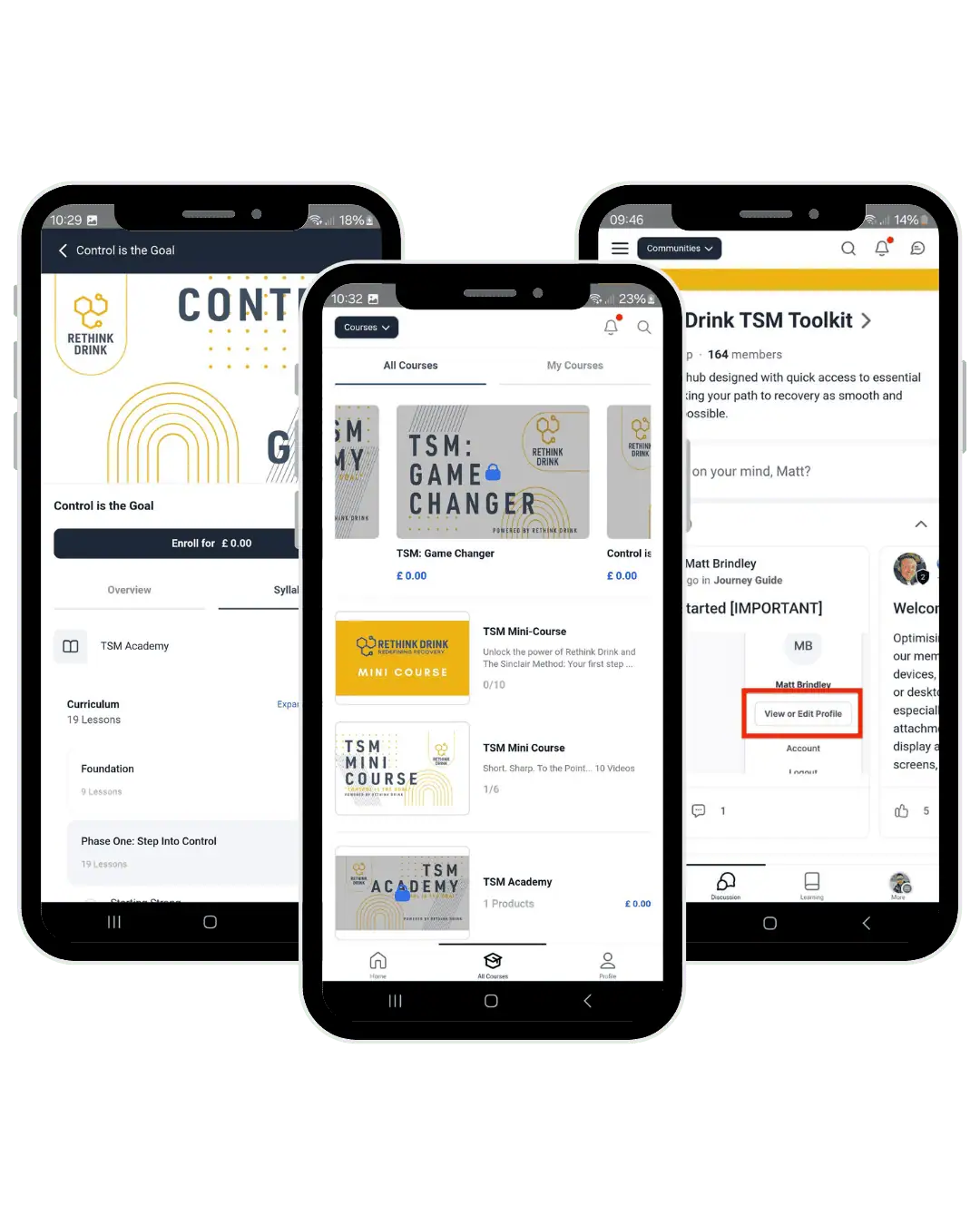
Access training and support via our exclusive App, or online.
Clinically Proven Results - Backed by Over 35 Years of Research
Clinically Proven Medication
FDA-approved since 1994 and licensed by the UK MHRA for alcohol dependence.
Endorsed in NICE Guideline CG115 and listed on the WHO Model List of Essential Medicines.
Dedicated Support Team
Guidance from a team that mixes world-leading clinical expertise with coaches who’ve successfully walked the path themselves.
Science-based habit rewiring, zero judgement.
Stay On Track With The App
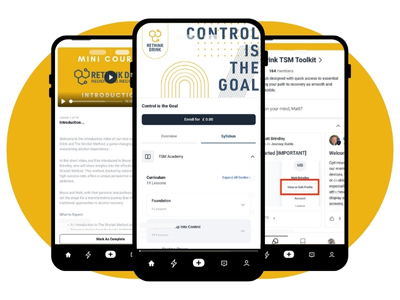
Learn at your own pace, in your own time - in the privacy of your own home
Unlimited coaching, support & guidance
Lean on a community that fully understands your journey, walking the same path.
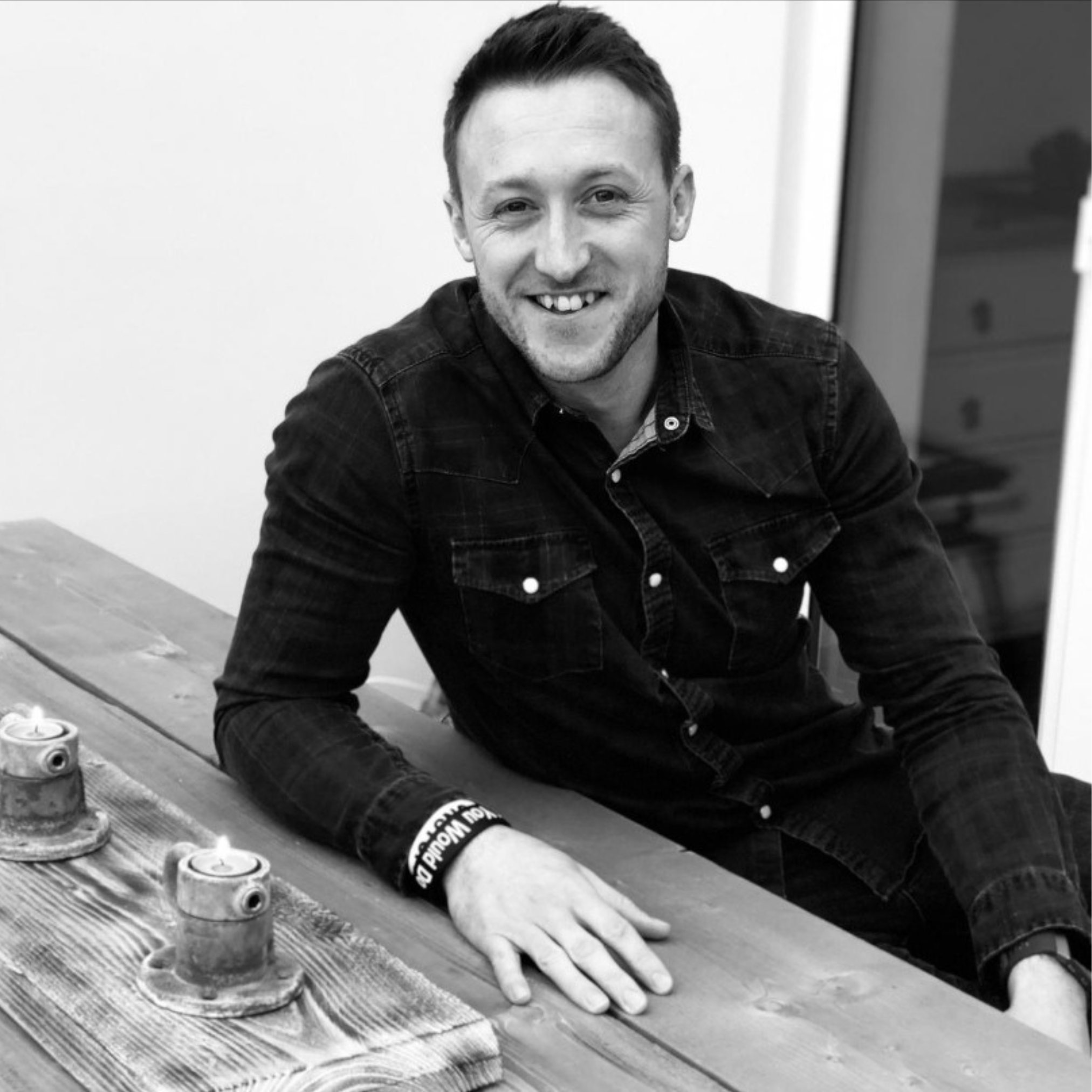
"I get it. I’ve been exactly where you are"
I was the “successful-on-paper” guy who still needed a drink to shut his brain off every evening.
Hangovers were normal; guilt was constant.
Will-power, Dry January, even a 12-step meeting - none of it changed the loop.
Then I read a single study: take naltrexone before you drink and the buzz that trains your brain to want more never lands.
With cravings muted, habit change finally sticks.
Three months in, my units were down 70 %, mornings felt clean, and I realised I hadn’t “quit life” - I’d reclaimed it.
That discovery became Rethink Drink: science first, shame never.
Want the same off-switch? Book a quick chat →
You Deserve a Life Where Alcohol Doesn’t Call the Shots
We know first hand how exhausting the endless battle with alcohol can be.
That's why our programme uses a clinically-proven method alongside transformative coaching, habit-change strategies, and expert guidance - so you can finally break free from alcohol’s grip and get back on the track you were supposed to be on.
78% clinical success rate.
100% commitment to your future.
Because you deserve nothing less.
Get the inside scoop
